Red vs Green and Brown Lentils: Choose by Texture
Compare split red, whole green and brown lentils by texture and recipe role, with a substitution checklist that avoids relying on colour or a fixed timer.
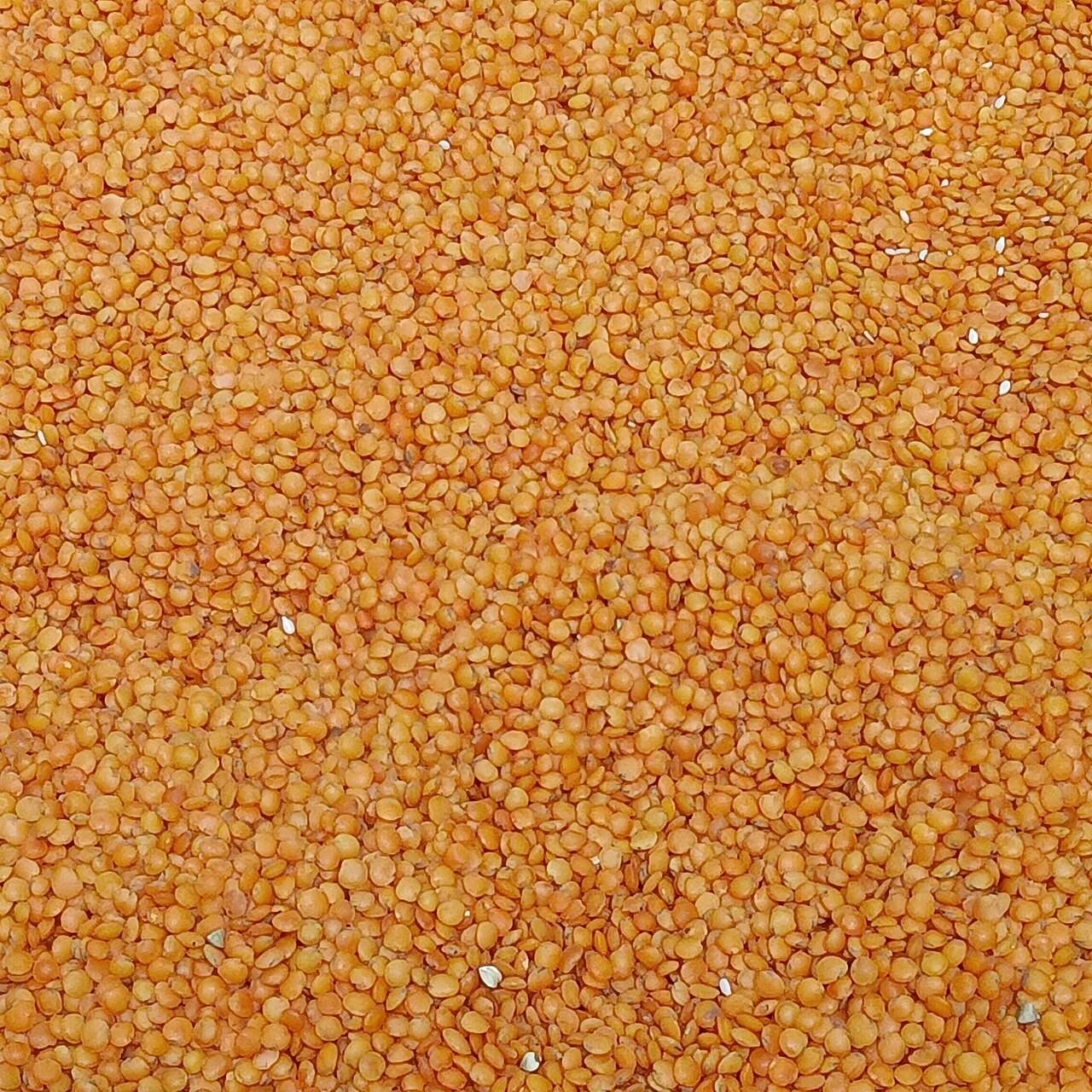
Choose lentils by the texture your recipe needs, then check the packet for the variety and whether they are whole or split. Split red lentils commonly soften into the surrounding liquid; whole green and brown lentils can keep a more distinct shape. Colour is a useful shopping clue, but it is not a complete cooking instruction.
That distinction explains why a perfectly good bag of lentils can produce the wrong result for a recipe. A creamy soup and a salad may both begin with lentils, yet ask them to do very different work.
Read “whole” and “split” before the cooking time
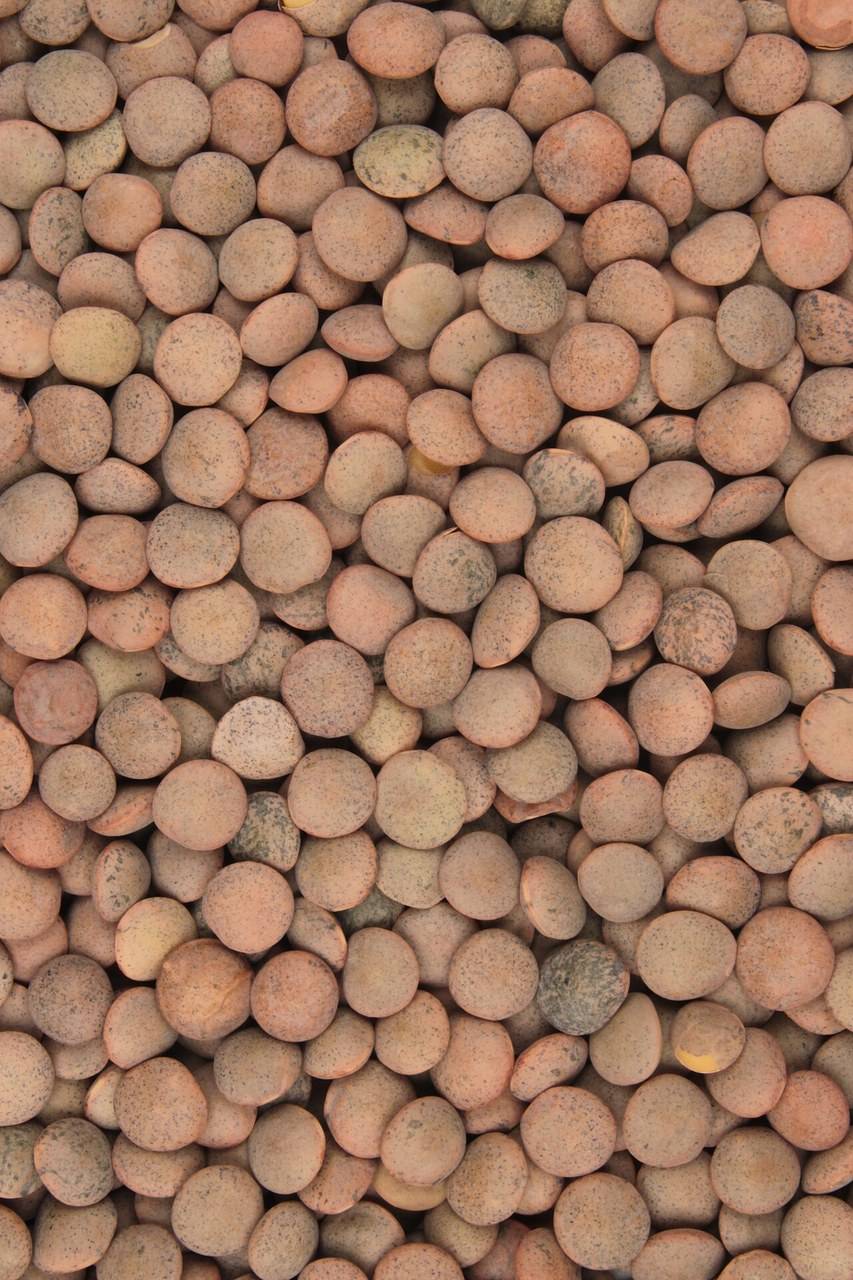
Harvard's Nutrition Source distinguishes whole lentils with their outer covering from split lentils whose husks have been removed. The split forms cook more quickly and break down readily, while whole forms generally take longer and can retain their shape. Those differences matter more to a substitution than whether one packet looks greener than another.
Look at the actual contents as well as the product name. A flat, split piece is different from a small whole seed. Packaging language and varieties differ between shops. If a recipe specifies a particular lentil and the bag gives different instructions, do not resolve the disagreement by copying a timer from a general comparison chart.
Use the finished dish as your starting point
| Your intended result | A reasonable starting choice | What to watch while cooking |
|---|---|---|
| A smooth or thick soup | Split red lentils | Whether the liquid and lentils have become the texture you want |
| A salad with separate pieces | A whole variety suited to that recipe | Tenderness before the pieces begin to collapse |
| A flexible stew | Brown or green whole lentils, if the recipe allows | Both the lentils and the other ingredients need to be ready together |
| A purée or spread | A recipe written for soft-cooked lentils | Moisture and seasoning after cooking, rather than colour alone |
This is a selection guide, not a promise that every cultivar behaves identically. Canada's Northwest Territories health department similarly places red lentils in soups and stews, and describes brown and green lentils as useful when more shape is wanted in its beans-and-lentils cooking guide.
Why a direct substitution can change the whole pot
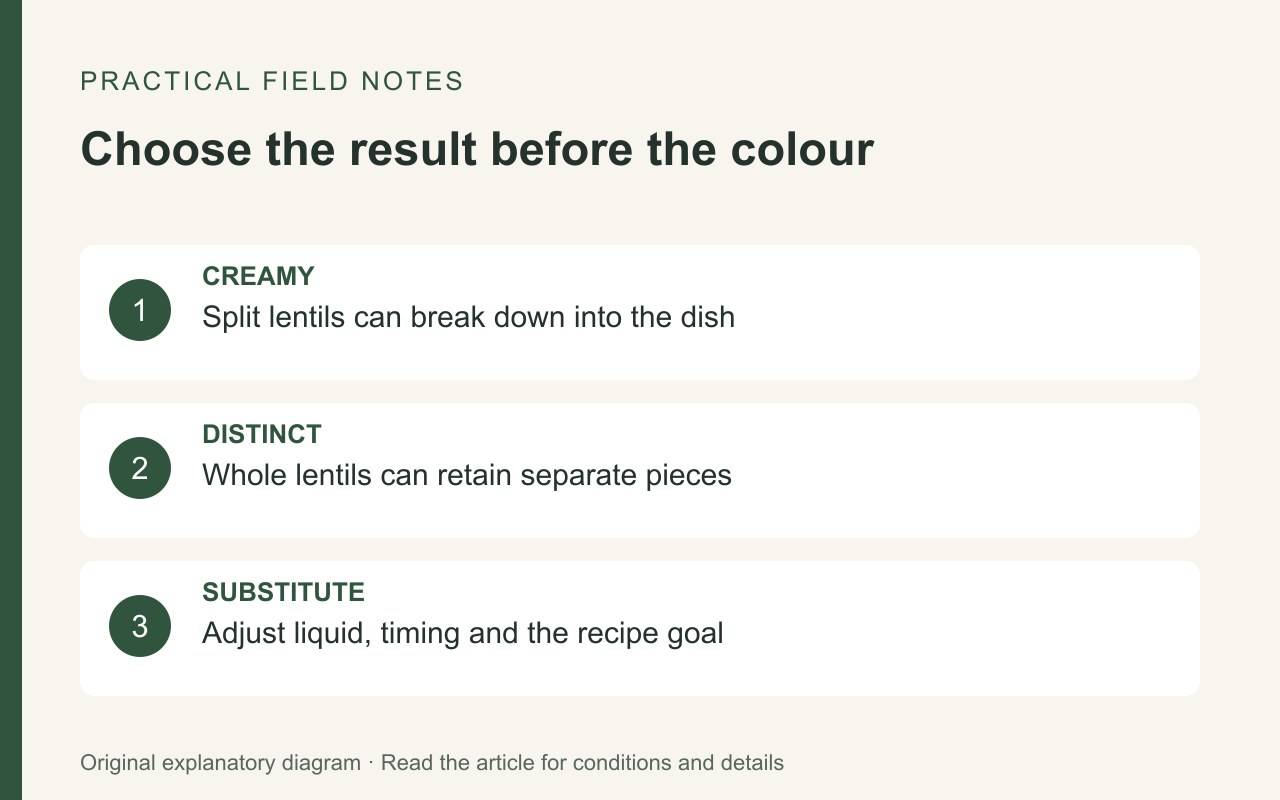
Imagine a recipe built around separate green lentils and roasted vegetables. Replacing them with split red lentils may give you something enjoyable, but the lentils can become part of a sauce rather than remain a separate component. Decide whether you welcome that change before making the substitution. If the presentation depends on distinct pieces, choosing a compatible whole variety is usually the clearer route.
Now reverse the example. A soup written for split lentils may rely on them to provide body. Swapping in a whole variety can leave more separate lentils in a thinner liquid. You might prefer that result, but it should be an intentional change rather than a surprise discovered after the rest of dinner is ready.
Write the intended result at the top of the recipe: “soft and blended” or “tender and separate.” That small note gives you a better reason for choosing the next bag than a photograph of a finished dish on the packet.
Treat the timer as a check-in point
Published cooking times vary because varieties and preparations differ. Iowa State's lentil guide gives shorter times for split red lentils than for whole lentils and notes that older lentils can take longer to soften. Use the packet or recipe as a starting point, then check tenderness as the cooking progresses.
For a dish that needs separate pieces, avoid scheduling your first check for the very end of the longest time you have seen online. For a creamy preparation, do not stop only because the clock has reached a number. Check the actual food. If the pot needs more time, also check the remaining liquid and the heat rather than leaving it unattended.
Make one change at a time when adapting a recipe
If you are trying a different lentil, keep a brief record of the variety, the recipe and what you changed. You do not need a laboratory notebook. “Split red, wanted soup, needed a looser finish” gives you a starting point next time. Changing the lentil, cooking method, liquid and batch size together makes it harder to identify which choice mattered.
Keep any leftover dry lentils labelled in their original packet or a clearly marked storage container. An unlabelled jar removes precisely the information you need to repeat a successful result. If you combine the ends of several bags, use them in a recipe that tolerates variation rather than expecting a uniform salad texture.
Texture is not a nutritional ranking
There is no need to turn this cooking comparison into a claim that one colour is automatically the healthiest. The question here is what each ingredient can do in a particular meal. Portion, the other ingredients and your dietary needs are separate considerations. A red-lentil soup does not become a failed meal because its lentils no longer look like individual seeds.
Once you have selected the right kind, use our lentil-cooking guide for the practical sequence. If you are preparing extra, our cooked-lentil freezing guide covers portioning and storage. Together, those decisions let you choose an ingredient for a purpose and give the finished batch a useful next step.