How to Cool and Store Cooked Rice Safely for Tomorrow
A practical guide to cooling rice promptly, refrigerating it and reheating once, with clearly identified UK household guidance and a next-day lunch checklist.
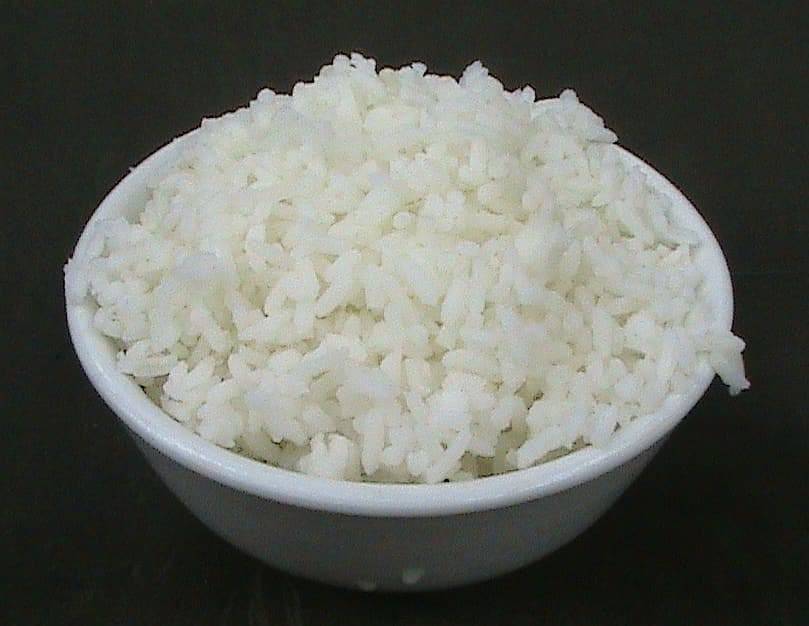
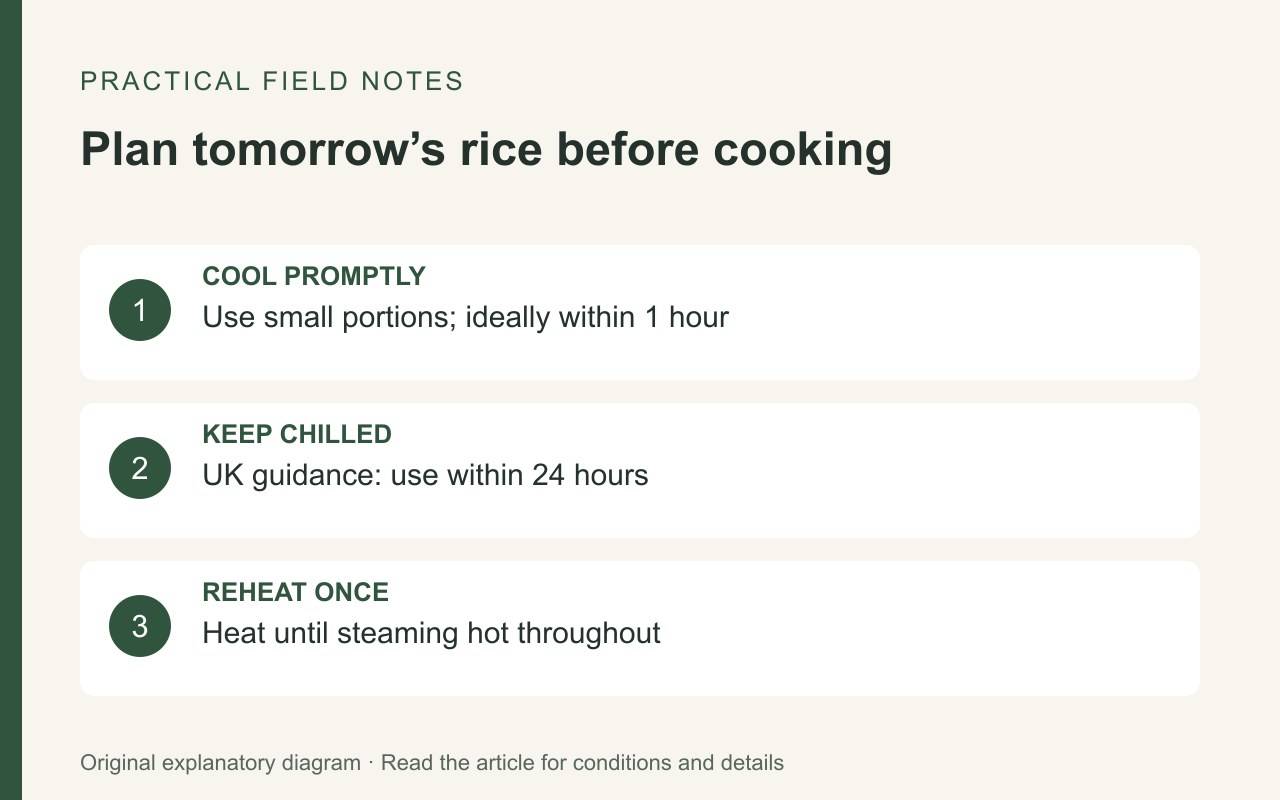
For tomorrow's rice, plan the cooling before you start cooking. Divide leftovers into small portions, chill them promptly and keep them refrigerated. UK household guidance recommends cooling rice as quickly as possible, ideally within an hour, using refrigerated rice within 24 hours and reheating it only once until steaming hot throughout. Do not leave a pan of rice on the worktop overnight and expect reheating to make it safe.
This guide follows the UK advice identified below. Food-storage guidance can differ between authorities and settings; follow any stricter instructions that apply to your household or a medically prescribed diet.
Why rice deserves its own storage plan
The NHS explanation of starchy foods notes that uncooked rice and grains can carry bacterial spores that survive cooking. If cooked food is left at room temperature, bacteria can grow and produce toxins that reheating may not remove. A hotter second cooking is therefore not a substitute for proper storage after the first one.
Think of cooking, cooling, storage and reheating as separate decisions. Getting the final step right does not erase an unknown earlier step. That is particularly useful when someone asks whether a container “looks fine”: its appearance does not tell you how long it was left out.
Set up a small cooling station
Before the rice is ready, find clean shallow containers, clear refrigerator space and decide which portions will be eaten now. Keep the containers away from raw meat, dirty utensils and the area used for washing up. A small batch is easier to organise than a quantity chosen only because the saucepan has room for it.
If the meal is busy, give the storage task a place in the sequence. For example: serve the portions for dinner, divide the remainder, begin cooling it promptly and put it away. Do not make the leftovers the final job after eating, clearing the table and doing everything else in the kitchen.
Divide the rice instead of waiting for the pan
Food Standards Scotland's storage guidance advises quick cooling, ideally within an hour, and refrigeration for no longer than 24 hours. Small portions make that plan more manageable. Avoid leaving the whole batch in the cooking vessel while you wait for it to become completely cold on its own.
Use clean utensils and food-safe containers. If you need to cool a substantial quantity, follow a reliable cooling method suited to your equipment rather than improvising with a deep, tightly packed tub. Set a reminder while you finish the meal. A reminder is useful only if someone is responsible for acting on it.
Label the stored portion with the preparation date and enough detail to distinguish it from another batch. If dinner finishes around the same time on two consecutive evenings, “yesterday's rice” can quickly become an ambiguous description.
Make a decision about tomorrow's lunch
| Your plan | What you need to establish first |
|---|---|
| Eat the rice cold | It was cooled promptly and has stayed refrigerated within the recommended time |
| Reheat at home | There is time to heat it thoroughly and eat it promptly |
| Take it to work | You can maintain chilled storage during travel and before eating |
| Save it for a later date | Use a suitable freezing plan rather than extending its refrigerator time |
If there is no way to keep a rice lunch chilled until it is needed, choose a different lunch. A recipe that suits your kitchen may not suit a long journey followed by several hours away from refrigeration. Packaging, travel and the destination are part of the meal plan, not details to solve after the container has left home.
Reheat one portion thoroughly
Food Standards Scotland's cooking advice emphasises heating food thoroughly and not reheating it more than once. Keep the rice-specific 24-hour storage limit above in mind, and heat the portion until it is steaming hot throughout. Follow your microwave or other appliance's directions, including any stirring or standing instructions, instead of relying on the temperature of the container.
A microwave can leave unevenly heated food, so break up a cold clump and check the centre as well as the edge. Do not repeatedly warm the entire stored batch when you need only a small amount. Serve the reheated portion promptly rather than allowing it to become another set of leftovers with an increasingly complicated history.
Keep meal-prep ambition realistic
Rice can be part of our flexible grain-bowl formula, but “meal prep” does not mean every cooked ingredient belongs in the refrigerator for an entire working week. Choose storage and timing for the actual ingredient. A weekly menu can include rice cooked on different days or a separate, properly managed freezing plan.
Consider writing the next use on the label: “Thursday lunch, eat cold” or “Friday dinner, reheat once.” This is an organisational example, not a new storage limit. It connects a batch to an intended meal so that it is less likely to sit forgotten behind newer food.
When the history is uncertain
If you cannot establish that the rice was handled and stored safely, discard it. Do not taste a little to investigate. A clean-looking container, a pleasant smell or a plan to fry the rice are not evidence that the earlier cooling was safe.
The useful habit is to decide early: how much to cook, which portion to keep and when it will be eaten. That approach gives tomorrow's meal a clear history and avoids turning a straightforward bowl of rice into a guess about yesterday's kitchen.