How to Store Dry Lentils in a Home Pantry
Keep dry lentils organised in suitable containers, preserve package information and distinguish ordinary pantry storage from the separate rules for cooked lentils.
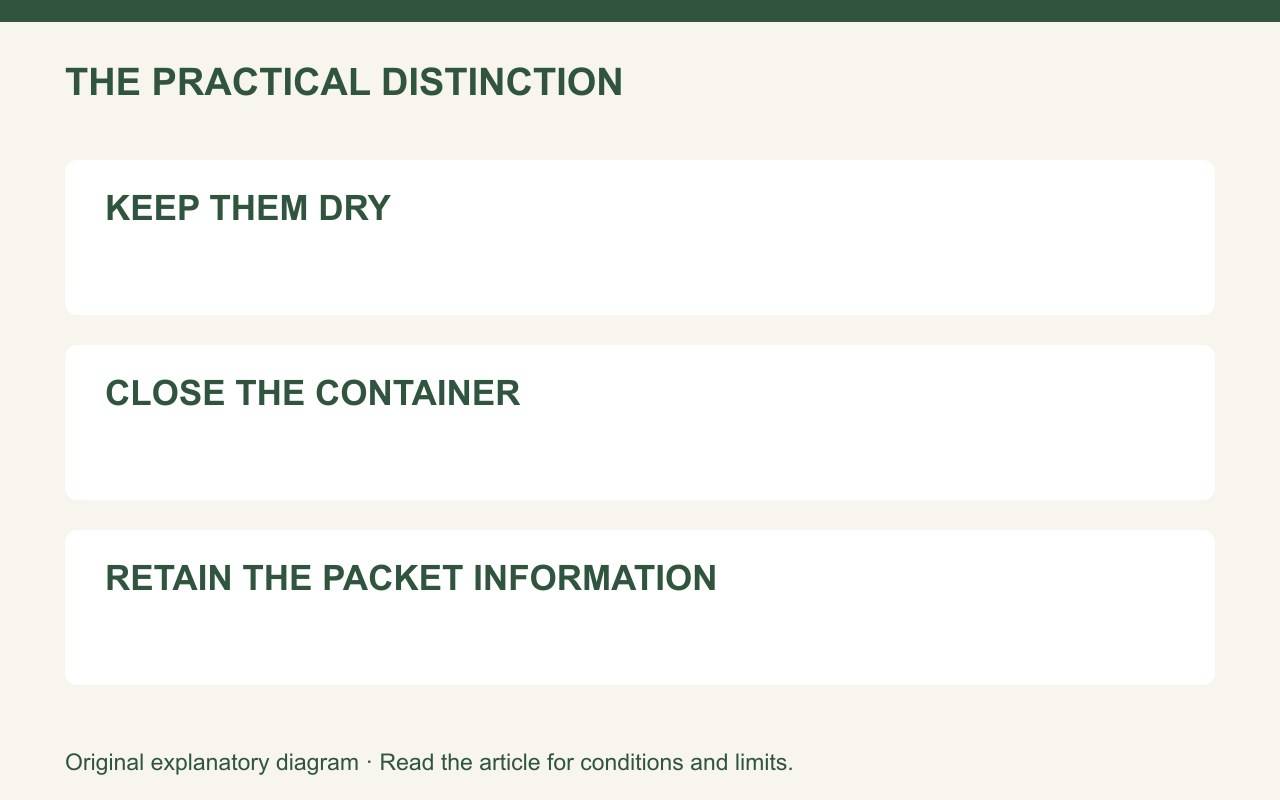
Dry lentils are convenient pantry ingredients when their storage is as organised as their cooking. Keep them dry, use a suitable tightly closed container and retain the packet information when you decant them. The aim is to protect the food and make the next meal easier to plan, rather than build a large collection of anonymous jars whose age and contents nobody remembers.
Start with the packet and its condition
Check the product’s own storage instructions and date information. Look for damage to the packaging or evidence that the contents have become damp or contaminated. A bag that has been exposed to a problem needs a different decision from an intact package in ordinary household storage. Do not assume the word “dry” means that nothing can ever go wrong.
Iowa State’s lentil guidance gives about a year or the package’s date for dry lentils in a bag, and recommends transferring an opened package to an airtight container. Treat that as guidance for ordinary storage, not a promise that any batch will retain identical quality regardless of its history. The package and actual conditions still matter.
Choose a practical place before choosing a decorative jar
Utah State’s household storage guidance describes lentils among foods kept in suitable containers in a cool, dry setting. For an everyday kitchen, consider whether a cupboard is exposed to heat, moisture or other avoidable problems. A display position beside a hot cooking area may look convenient while being a poor match for the storage task.
Use a clean, dry container suitable for food storage. Make sure the lid closes properly and that the container is dry before filling it. Do not reuse a vessel that previously held a non-food chemical simply because its shape fits the shelf. Keeping the food’s identity and its storage suitability together matters more than matching every jar.
Preserve useful information when decanting
Keep the variety, date information and cooking directions with the batch. Red split lentils and whole green or brown lentils are not interchangeable for every texture goal. A clear label can prevent a cooking decision from becoming a guessing game several weeks after the original packet has been discarded.
| What to keep | What it helps you do |
|---|---|
| Product name and variety | Choose the right texture and recipe role |
| Package date information | Keep the original reference instead of inventing a new shelf life |
| Date opened, if useful | Understand your own household rotation |
| Cooking instructions | Refer to the actual product rather than a remembered timer |
An opening date is a household note, not a new manufacturer guarantee. Keep its meaning clear on the label. If you photograph the packet, include enough information to identify which container it belongs to; an unlabelled collection of package pictures is another form of uncertainty.
Rotate batches instead of continually topping up
Use the older suitable batch before opening a newer one. Avoid pouring new lentils over a small remainder indefinitely, because the combined contents then have several different histories. A smaller container that you can finish may be more useful than a large jar that always looks partly full.
For example, set aside the current batch for the next planned soup and leave the new bag unopened until needed. This is a meal-planning example, not a storage experiment conducted for this article. Its benefit is making rotation visible without requiring a complicated inventory system.
Respond to pantry pests rather than adding a kitchen myth
Minnesota Extension recommends inspecting stored foods and using tightly closed suitable containers. If you find insects, webbing or another sign of infestation, identify the affected food and follow reliable pantry-pest guidance. Do not assume a decorative leaf or a stronger-smelling cupboard cleaner will protect an otherwise compromised batch.
Keep the storage area clean and investigate signs of moisture or contamination. A normal-looking jar cannot establish the full history of its contents. When you are unsure whether a product remains suitable, use its maker’s advice or an appropriate food-safety source rather than tasting it to settle the question.
Cooking begins a different storage routine
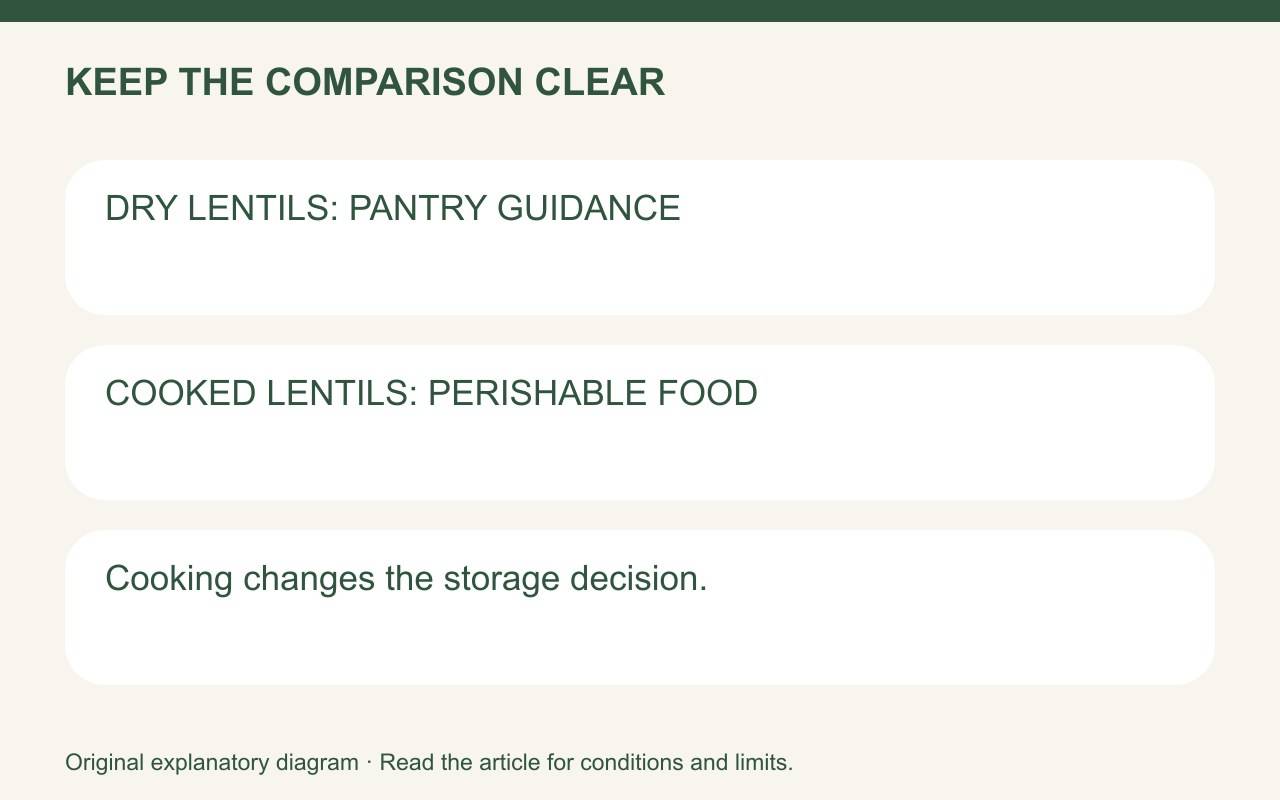
Once lentils are cooked, they are no longer a dry pantry ingredient. Follow appropriate cooling, refrigeration and reheating guidance for the cooked food. Do not transfer the dry product’s storage expectation to a container of leftovers. Our lentil-cooking guide helps with the preparation stage while keeping texture decisions separate from storage safety.
A dependable pantry routine is deliberately modest: a suitable dry place, a closed container, the original information and a plan to use the batch. Those steps make lentils easier to find and cook without turning an ordinary ingredient into an uncertain long-term storage project.