Whole Mung Beans: What They Are and How to Cook Green Moong
Learn how whole mung beans differ from split mung dal, how to cook them and what to know about sprouts.
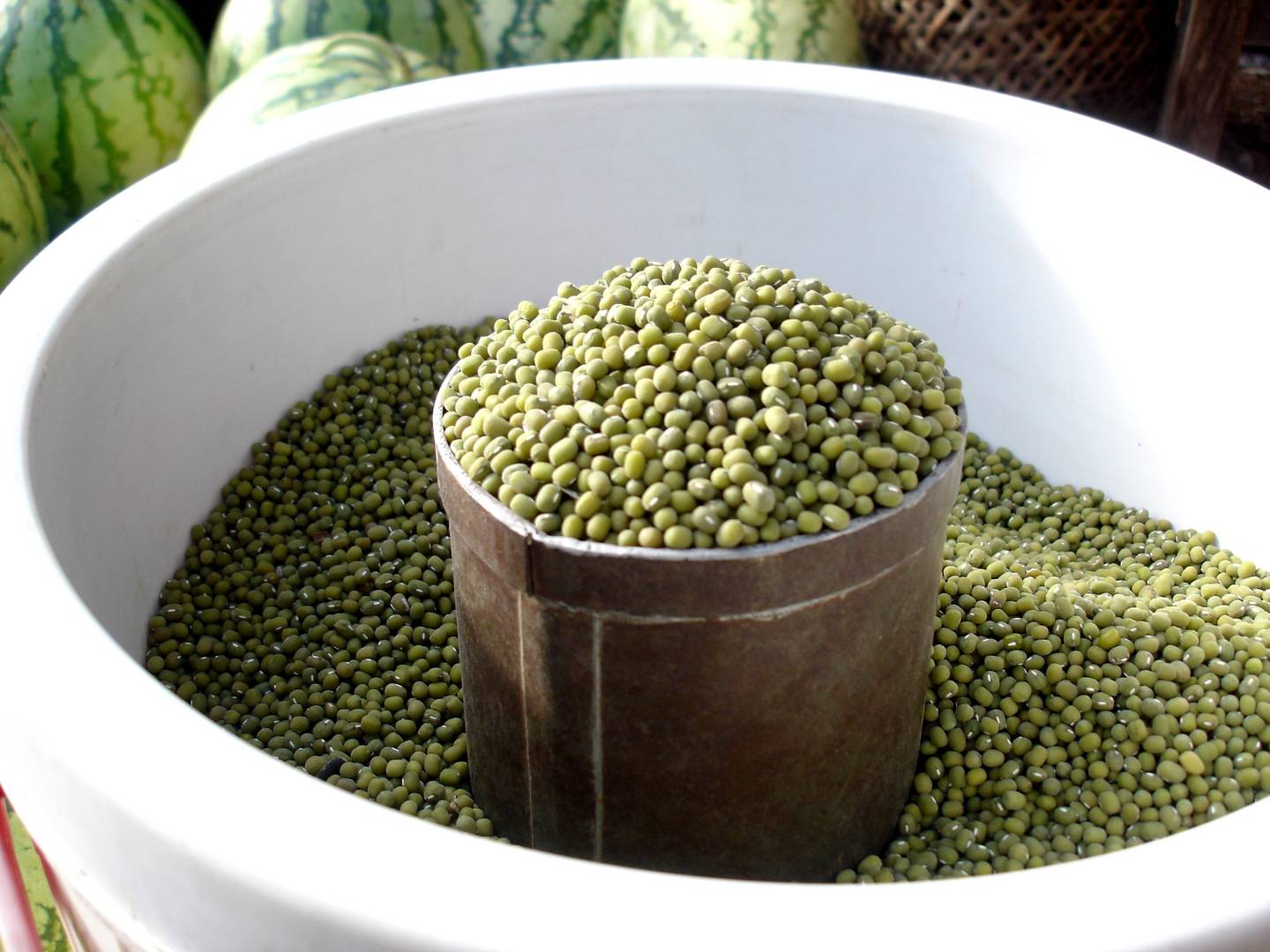
Whole mung beans are small, usually green pulses with their skins on. Also called green gram, whole moong or sabut moong, they soften when cooked but can remain distinct enough for a salad, curry or side dish.
You may know mung beans as the source of familiar bean sprouts. The dry whole bean and the sprout are used differently, so check which form your recipe needs before you start.
Whole mung versus split mung dal
Whole mung beans are intact and have a green skin. Split mung with its skin on is broken into halves and looks green and yellow. Split yellow mung dal has been skinned as well as split, exposing the yellow interior.
The split forms generally cook faster. Skinless yellow mung also softens readily into a creamy dal; whole beans bring more texture. The name moong dal can be used for the ingredient or for a finished dish, so look at the description and photograph on the package.
How to cook whole mung beans
Sort and rinse the beans. Soaking can shorten stovetop cooking: one green gram curry recipe recommends soaking them for three to four hours, draining and rinsing before cooking. Add fresh water, bring to a boil and simmer until the beans are tender through the center. Add water if necessary to keep them covered.
Time depends on the bean and method. One New Zealand cooking guide suggests about 30 minutes of simmering after a hot-water soak, but older beans may take longer. Taste several beans; for a curry, cook them softer or mash a few to thicken the sauce. Follow your pressure cooker's instructions if using one.
Ways to serve them
Make a green moong curry with onions, tomatoes and spices, or fold tender beans into a warm grain bowl. In some dishes, soaked mung is ground into a batter, as for pesarattu; use a recipe written for that preparation rather than substituting already cooked beans.
What about mung bean sprouts?
Sprouts have different food-safety considerations from dried beans. Bacteria can grow during sprouting, including at home. The US FDA advises people at greater risk of foodborne illness to avoid raw or lightly cooked sprouts; thorough cooking reduces the risk. Rinsing alone does not reliably eliminate bacteria inside the seeds.
For an introduction to the wider pulse family, see beans, peas and lentils.