Split Red Lentils: Why They Cook Quickly and How to Use Them
Learn how split red lentils cook, how to use them in soup and dal, and what to substitute.
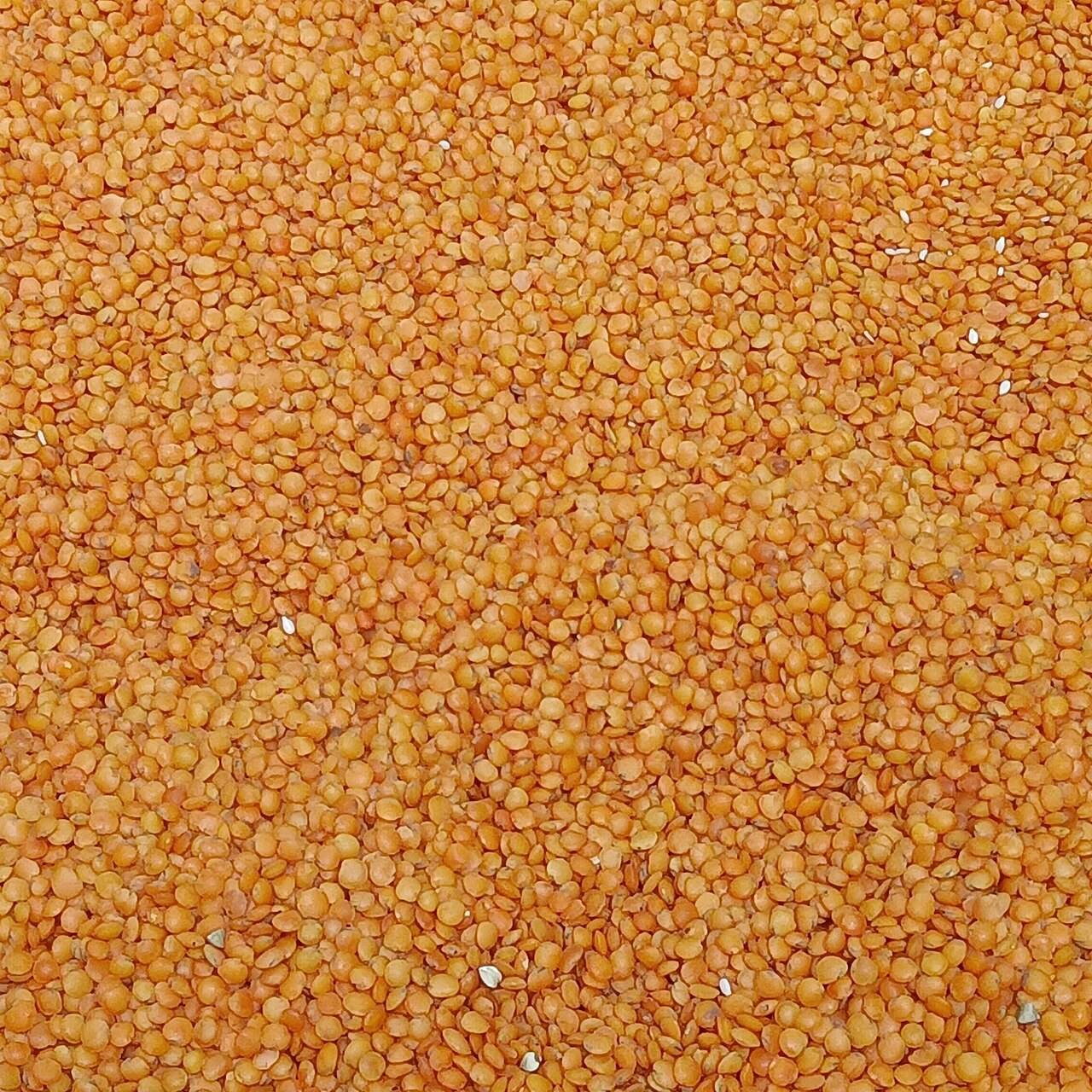
Split red lentils are small, skinless lentil halves that look orange to pink when dry. They cook quickly and soften into a thick, creamy texture, making them especially useful in soups, dals and purées. In Indian cooking you may see them called masoor dal.
They are excellent at making a soup feel substantial. They are less interested in remaining tidy little individual pieces for a salad.
Split red versus whole lentils
Splitting the lentil and removing its skin helps it soften quickly. Whole lentils with skins generally take longer and are better suited to dishes where distinct pieces matter. Whole masoor, for example, has a brownish skin over its red-orange interior.
Not every red lentil on a shelf is split: skinless lentils can also be sold whole. Check the package and the pieces themselves, and use the cooking directions for the form you've bought.
How to cook split red lentils
Pick through the lentils and rinse them. Lentils usually don't need soaking. For a basic stovetop preparation, Lentils.org suggests 1 part dry lentils to 3 parts water by volume, brought to a boil and then simmered. Its suggested starting time for split red lentils is 5–7 minutes; Harvard gives about 10–15 minutes for split lentils. Start checking early, then continue until the lentils are as soft as your dish needs.
Use a pan with room for the lentils to expand. Stir occasionally and add water if the pot becomes too thick. For a smooth dal or soup, a softer, broken-down texture is welcome. For separate lentils, choose a whole variety rather than relying on a very short timer to perform a magic trick.
Ways to use them
- Simmer them into a soup with vegetables and spices.
- Make masoor dal and finish it with a fragrant spice tempering.
- Cook them soft for a mash or spread.
- Add them to a stew when you want the lentils to help thicken the liquid.
Tomato, lemon and other acidic additions are often added after the lentils have softened in a basic cooking method; follow the recipe if it uses a different sequence.
Can you replace them with yellow mung dal?
Yellow split mung can make a soft dal, but it is a different pulse and has its own flavor and timing. Cook it according to its packet or a recipe written for mung. Brown or green whole lentils can also be delicious, but won't usually create the same smooth texture in the same time.
For more on a whole form, see brown lentils and whole masoor. Our lentil texture guide compares other common options.