How to Cook Frozen Korean Rice Cakes Without a Hard Centre
For frozen Korean cooking rice cakes, first check the packet and the shape.
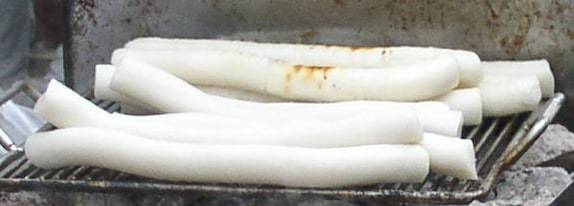
For frozen Korean cooking rice cakes, first check the packet and the shape. Tteokbokki cylinders and thin soup slices need different handling from filled rice-cake sweets. Follow any manufacturer instructions for cooking from frozen or thawing, then cook until the centre is tender and chewy.
A glossy sauce is not proof that the middle of a thick rice cake has softened.
Identify what is in the freezer
This guide concerns plain cooking cylinders and slices, often sold for tteokbokki or tteokguk. It does not apply to every sweet labelled tteok, nor to frozen mochi ice cream. Check the ingredients too: some tteokbokki products use wheat.
If you have a complete frozen meal rather than plain rice cakes, use the meal's instructions. Its sauce and other ingredients change the preparation.
A practical cooking sequence
- Read the packet before opening it. Establish whether the maker specifies thawing, soaking or cooking directly from frozen.
- Use the preparation stage in your chosen recipe. Some methods soak firm rice cakes before cooking. Korean Bapsang's tteokbokki method includes a soak; that is not a rule that every product needs the same duration.
- Separate pieces gently. Do not force a frozen block apart with a knife. Allow the specified preparation to loosen it.
- Cook in the liquid or sauce the recipe provides. Stir carefully enough to prevent sticking without breaking the pieces.
- Check the centre of a thick piece. Carefully cut or cool a sample before tasting. It should have a consistent tender chew rather than a firm core.
- Adjust the sauce after the rice cakes cook. If it becomes too thick first, add a little appropriate liquid and continue gently.
Why there is no single cooking time
Thickness, initial temperature, storage and the product's formulation all affect the result. A thin oval slice can soften before a thick cylinder. Giving both one fixed timing would be convenient for the clock and less convenient for dinner.
Use a recipe's time as a checking point, then judge the actual rice cake. Avoid reducing the sauce aggressively while waiting for an unusually firm centre.
If they split or turn mushy
Check whether the pieces were already cracked before cooking, whether you forced them apart, and whether cooking continued after they became tender. Change one variable next time rather than increasing heat and stirring harder together.
Serve the finished dish promptly for its intended texture. Keep remaining uncooked rice cakes according to the packet; do not assume freezing or reheating can rescue a product that has spoiled.
For shopping, see types of Korean rice cakes. Maangchi's garaetteok method also shows why cylinders and diagonally sliced soup pieces are related shapes rather than identical portions.