Split Mung Dal with Skin: What Is Chilka Moong?
Understand split mung beans with their green skins, how they cook and how they differ from other mung forms.
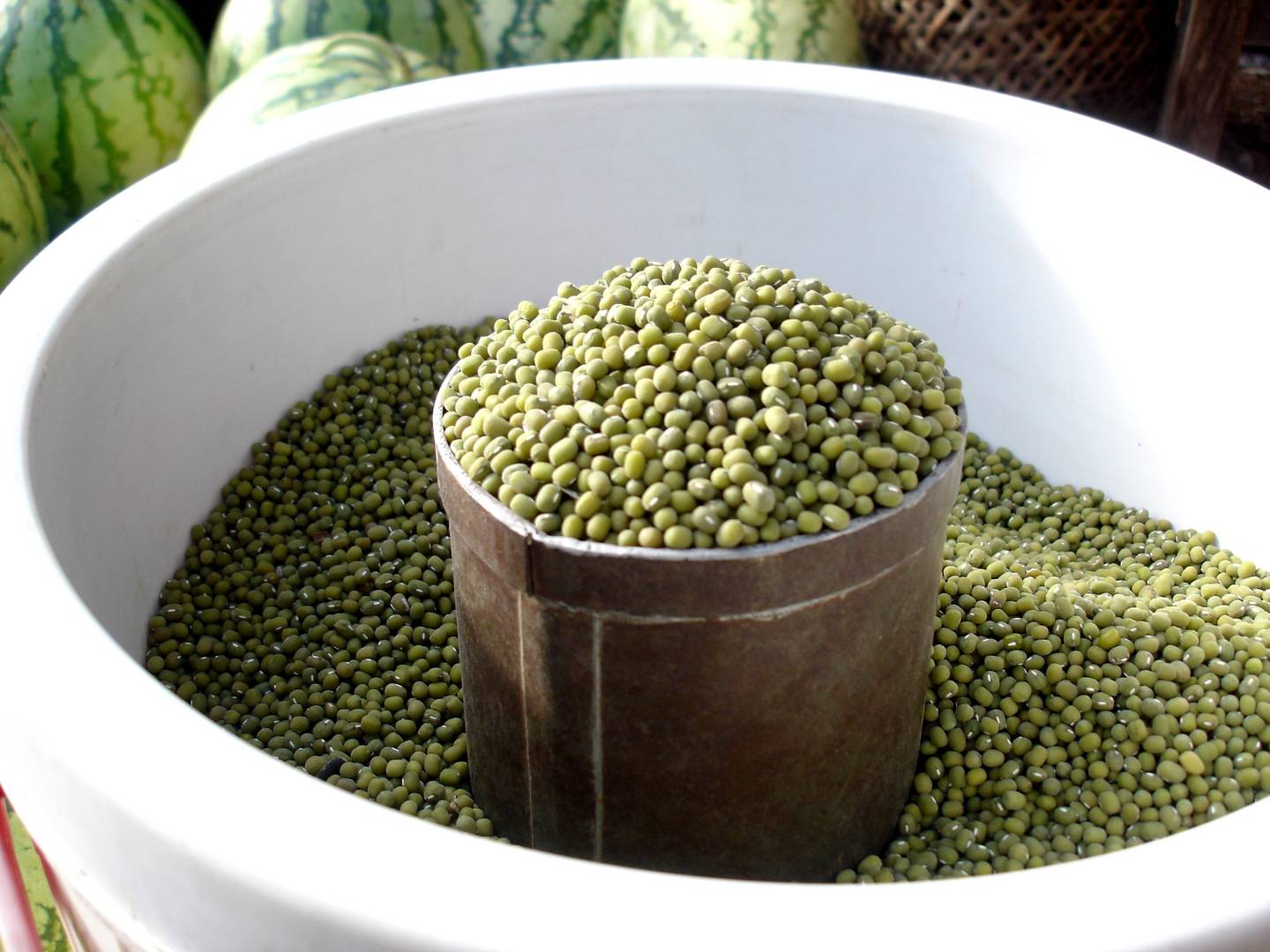
Split mung dal with skin is a whole mung bean divided into halves while its green outer skin remains. You may see it labeled chilka moong dal, green split mung or a similar name. The pieces show both green skin and yellow interior—a handy clue when several bags of dal are lined up at the shop.
It belongs to the same mung family as whole green mung beans and skinned yellow mung dal, but its form affects the texture and cooking time.
Chilka moong versus yellow moong dal
Both are split mung beans. Yellow moong dal has had its skin removed; chilka moong retains it. The skinned yellow form tends to soften into a smoother, lighter-looking dal. Chilka moong brings little flecks of green skin and a more textured appearance.
Whole mung is different again: it has the skin and has not been split. It generally needs longer to cook than the split forms. Check the words whole, split and skin on a package rather than relying on “green dal,” which can describe more than one product.
How to cook it
Pick through and rinse the dal, then follow the package or your recipe for soaking, water and timing. Bring it to a boil in water, reduce to a simmer and cook until the pieces are tender. For a looser dal, add hot water; for a thicker one, simmer a little longer or mash some of the cooked pulse.
If adapting a recipe for whole mung, begin checking earlier. If substituting for skinless yellow mung, expect the skins to remain visible and the result to feel less smooth. Different brands and the age of the pulse can also change the timing.
How does it taste and where can you use it?
Its mild, earthy flavor works with ginger, cumin, garlic and other seasonings used in dal. Serve a seasoned pot with rice or roti, or use cooked split mung in a soup. Some recipes also soak and grind mung for batter; use a recipe that specifies the form, since skin and texture affect the finished dish.
Can you replace it with whole mung?
Yes, in a forgiving soup or curry, but the beans remain larger and generally take longer. Cook them to tenderness using their own directions. For a smoother dal, skinned yellow mung is a closer starting point, though it won't provide the green flecks.