Mochigome: Japanese Sweet Rice and How It Differs From Table Rice
Mochigome is Japanese glutinous rice, often sold in English as sweet rice or mochi rice.
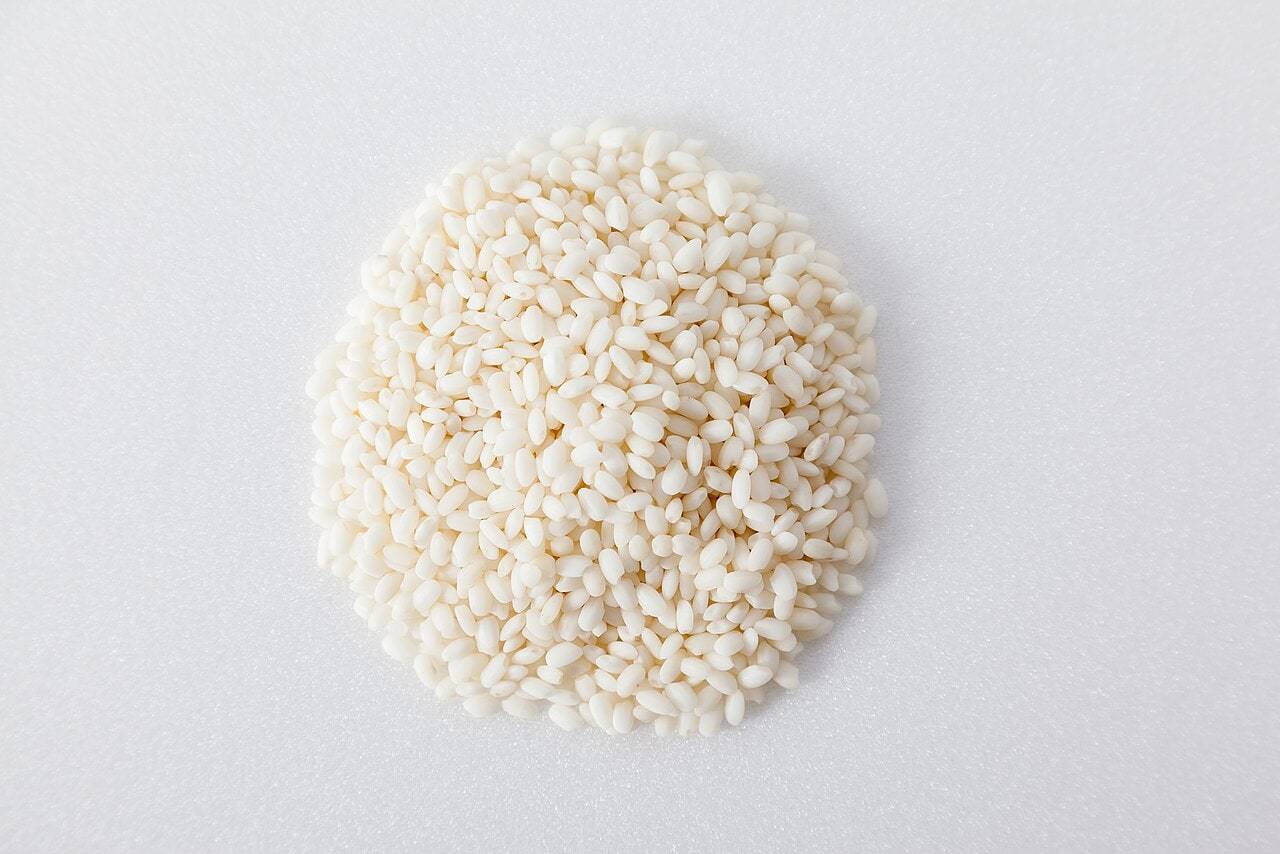
Mochigome is Japanese glutinous rice, often sold in English as sweet rice or mochi rice. Its short, plump, opaque grains cook into a particularly sticky texture suited to specialised preparations.
It is not the ordinary table rice generally used for sushi. Buying something labelled sticky rice for sushi can therefore lead to the wrong kind of stickiness: the adjective alone is not a shopping specification.
Whole rice, not rice flour
Mochigome is the grain. Mochiko is flour made from sweet rice. If a recipe begins by soaking whole rice and steaming it, a bag of flour cannot take its place. If it begins by making a flour dough, whole grains cannot simply be stirred in instead.
Check the recipe before shopping, particularly if the English name on the front of the bag is broad or unfamiliar.
Where mochigome is used
It is associated with mochi and other foods that need the characteristic cohesive texture of glutinous rice. Koda Farms describes its Japanese-style sweet rice as suitable for Japanese, Korean, Chinese and Filipino preparations, including mochi and certain confections.
Those uses do not imply one cooking method for every dish. A recipe for a whole-rice preparation should specify soaking, water and steaming or cooker instructions for the exact result intended.
What sweet and glutinous mean here
Sweet rice is an ingredient name, not a statement that sugar has been added. Read the ingredient list to distinguish plain rice from a prepared mix. Glutinous describes the sticky quality; it is not another word for wheat gluten.
For a plain everyday rice bowl, choose ordinary Japanese table rice. For a recipe explicitly asking for mochigome, seek out that product instead of trying to cook table rice until it behaves like dough.