Coconut Milk: Choosing the Right Kind for Cooking
Coconut milk used for cooking is made from coconut flesh and water.
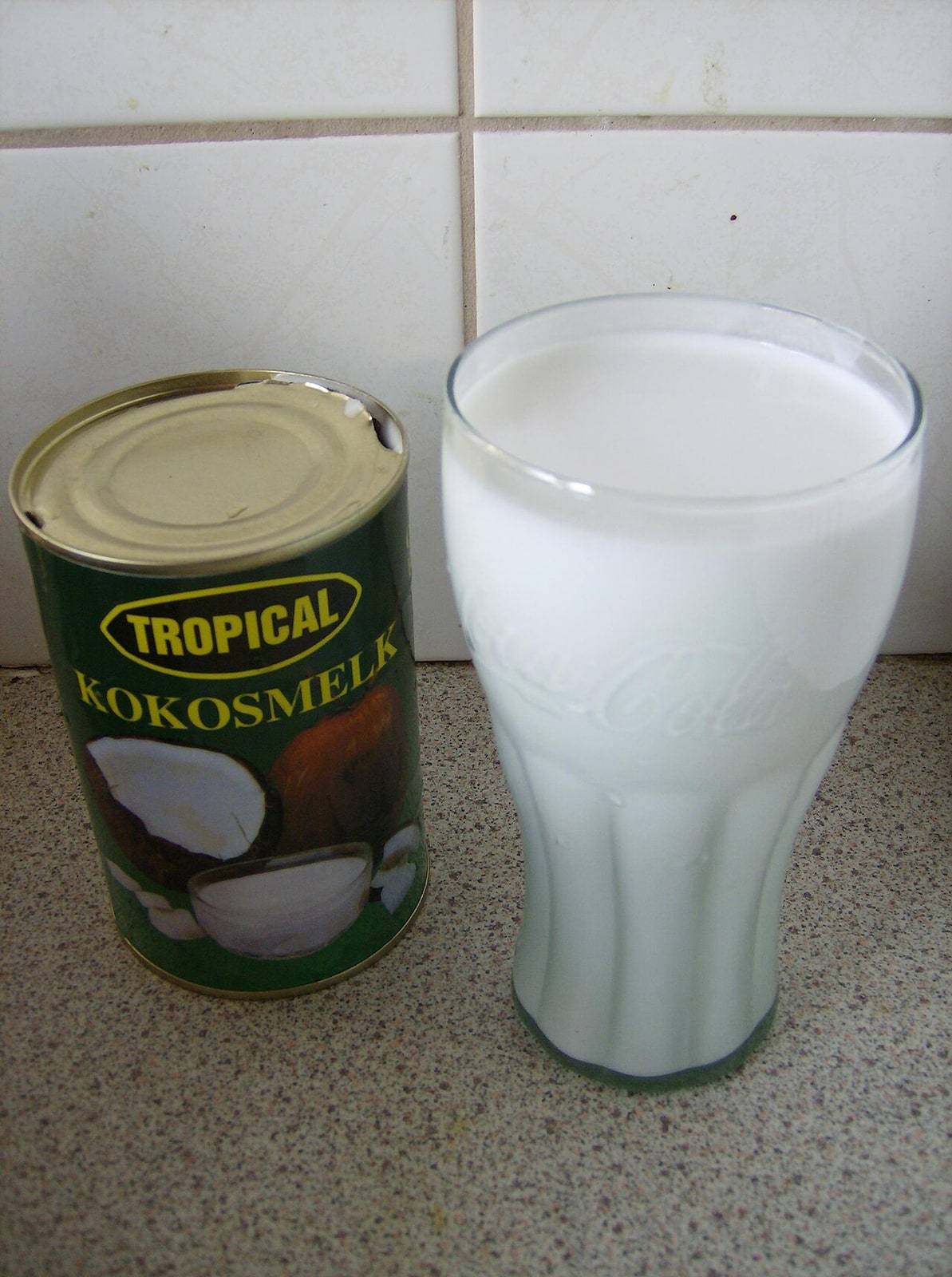
Coconut milk used for cooking is made from coconut flesh and water. It provides coconut flavour and body in dishes such as curries, soups and desserts, but products sold under the broad coconut-milk name can differ considerably.
Start with what the recipe expects: a cooking coconut milk, a lighter product, coconut cream or a beverage intended for drinking are not necessarily equivalent.
Check the ingredients and product type
A coconut drink formulated for cereal or coffee can be much more dilute than a cooking product. Likewise, a sweetened product can change the flavour of a savoury dish. Look at the ingredients and directions rather than buying by carton shape alone.
Some cooking coconut milks contain a stabiliser such as guar gum. Thai Kitchen identifies guar gum as a thickener in its products. That is a formulation difference, not proof that every product will separate or cook in exactly the same way.
Why the can may have a solid top
Coconut fat can separate and harden at cooler temperatures. Thai Kitchen notes that its canned milk can become very thick or appear almost solid; gently warming and stirring can return it to a more uniform liquid.
Separation by itself is not the same as spoilage. Still follow the label, condition of the packaging and normal food-storage guidance rather than using appearance as your only check.
Using a new product
For a first attempt, choose the kind and concentration the recipe specifies. A method that starts by cooking a thick coconut layer has a different aim from one that simply adds a blended milk to a soup.
If changing to a lighter product, expect the body of the dish to change. Adding more seasoning cannot always replace missing richness.
After opening
Refrigerate and use according to the actual product's instructions. If only a small amount remains, portioning it for freezing can be useful, although the thawed texture may become grainier. Our coconut-milk freezing guide explains the practical steps.