Bún Rice Noodles: Choosing and Cooking Vietnamese Rice Vermicelli
Bún are round rice noodles used in Vietnamese dishes, including noodle salads and soups.
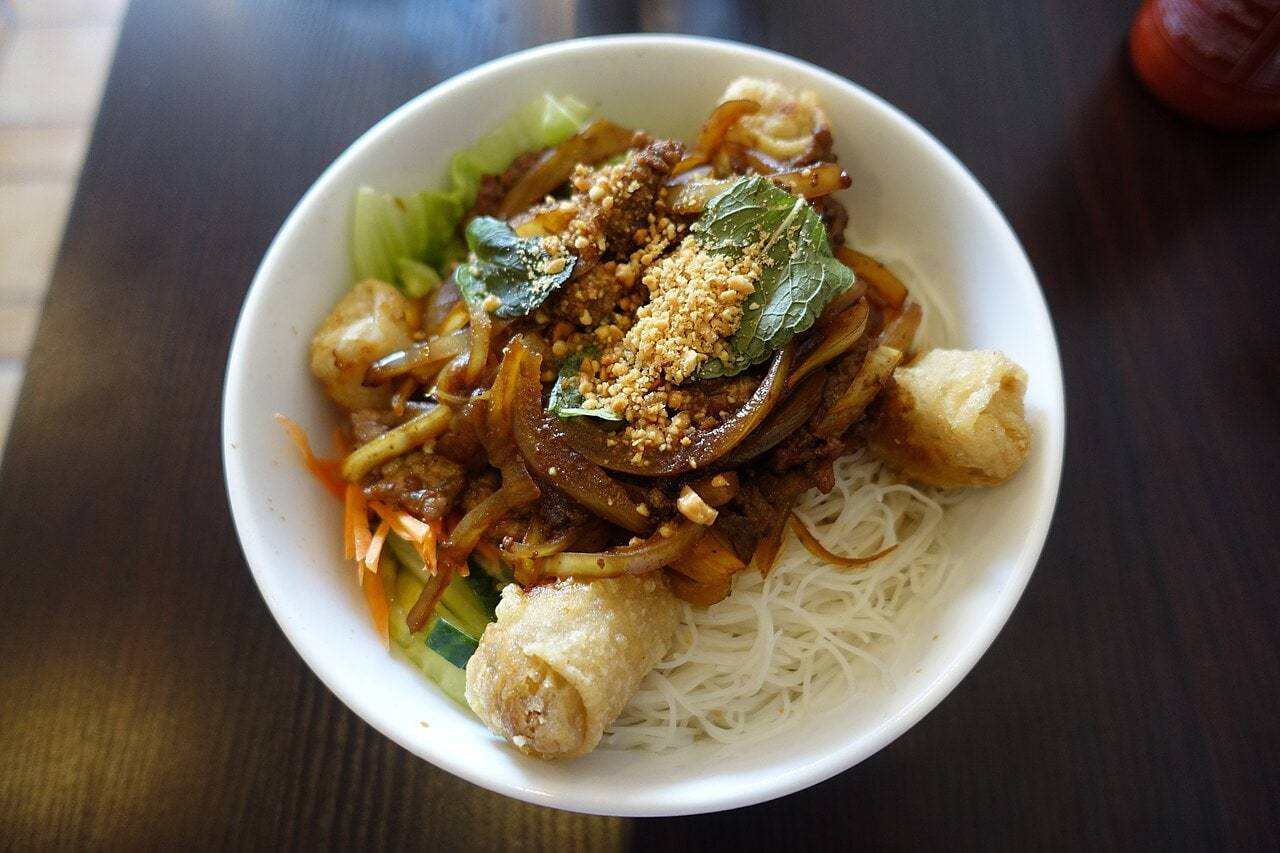
Bún are round rice noodles used in Vietnamese dishes, including noodle salads and soups. For a typical southern Vietnamese noodle salad, look for the fine round strands often sold as rice vermicelli. Do not confuse them with flat phở noodles or translucent mung-bean glass noodles.
“Vermicelli” describes a shape in English shopping language. It does not guarantee that every packet contains the same ingredient.
How to identify the noodles
Look for bún on the packet, a round rather than flat strand, and a description of the intended dishes. Then read the ingredients. A photograph of a noodle salad can help, but the preparation directions and noodle size are more useful than the word Asian on a shelf label.
The bún family includes different sizes, so a fine salad noodle and a thicker noodle for another dish may not share a cooking time. Choose the size your recipe names.
Cooking dried bún for a salad
Follow the packet's method, then check a strand before draining. It should be cooked through without a hard centre. Andrea Nguyen stresses that these salad noodles need cooking: a quick soak is not a universal substitute for boiling.
For the salad style she describes, rinse the cooked noodles in cold water and drain well. Separate them gently rather than squeezing a hot tangle into a compact ball. Let excess water escape before assembling the bowl; a wet noodle pile dilutes the dressing you have just balanced.
Do not transfer a soaking method for flat stir-fry rice noodles to bún simply because both contain rice.
Build a bowl with contrasting textures
A southern-style bún salad can bring together noodles, lettuce, herbs, vegetables and a grilled, fried or stir-fried topping. A dressing seasons the bowl as you eat. Nguyen's guide explains that the topping can vary widely; the noodles and fresh components give the dish its structure.
For your first bowl, keep each component distinct until serving. That makes it easier to adjust dressing and preserve the contrast between tender noodles, crisp vegetables and a warm topping.
Common shopping mistakes
| What you bought | What to check before cooking |
|---|---|
| Flat rice sticks | They may be intended for phở or a stir-fry rather than the round-noodle salad you planned |
| Glass noodles | Look for mung bean or another starch; they are a different noodle |
| Fine wheat vermicelli | Similar shape does not make it a rice noodle |
| Thicker bún | Use a recipe and cooking method suited to that size |
See types of Thai rice noodles for another set of names you may encounter nearby. A well-stocked noodle aisle is excellent news, provided you bring a little more information than “the thin ones.”