Split Urad Dal: Skin-On and White Urad Explained
Learn how split urad differs from whole black gram and which form to choose for dosa, idli and dal.
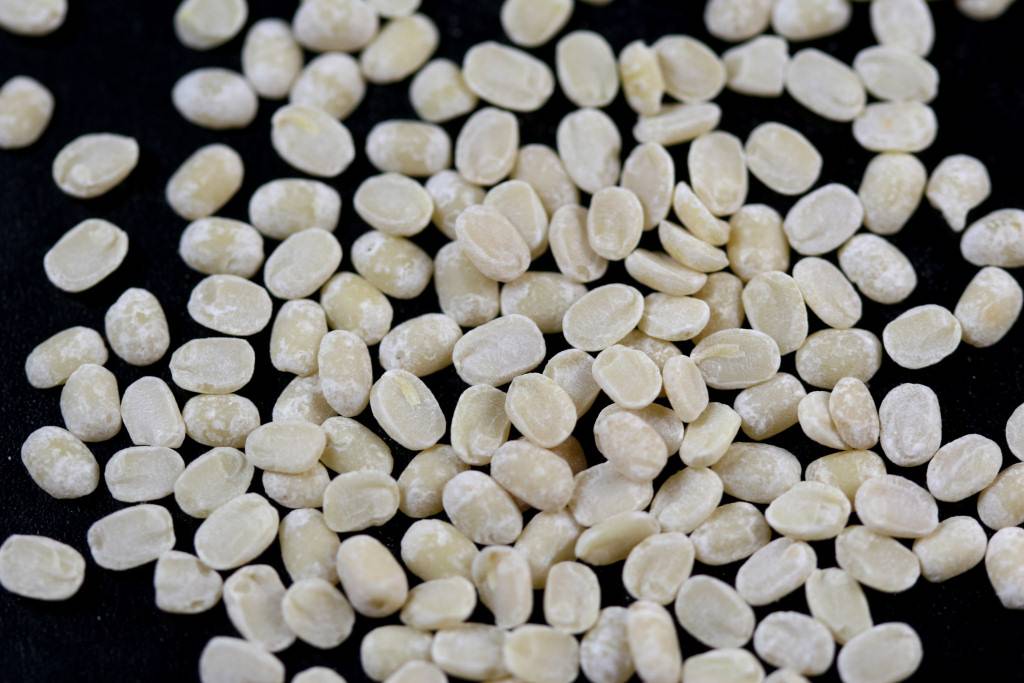
Split urad is black gram divided into halves. It is sold with its dark skin on or with the skin removed, revealing a creamy-white interior. Both may be called urad dal, so knowing which one a recipe intends can save a surprisingly long conversation with a supermarket shelf.
The skin-on form is often called urad chilka. Skinned split urad is commonly called white urad dal. Black gram is a pulse; despite a common English label, it is not the same thing as a black beluga lentil.
Skin-on versus skinned split urad
| Form | What to look for | Common use |
|---|---|---|
| Split urad with skin | Dark skin on split pieces, with pale interiors | Mixed dal dishes, including Punjabi maa chole |
| Skinned split urad | Creamy-white split pieces | Dal, dosa batter and tempering, depending on the recipe |
Skinned urad is also available whole, so a white appearance doesn't necessarily mean it has been split. For dosa, some cooks use whole skinned urad and others use split skinned urad; follow the recipe's preference.
How do you cook split urad?
Rinse it and follow your recipe for soaking and cooking. For one Punjabi dry-style preparation, Dassana's Veg Recipes soaks skinned split urad for four hours before cooking it with spices. Other dishes call for a softer consistency or a different method.
For dal, cook until tender and season as directed. For dosa or idli batter, the urad is typically soaked and ground with the other specified ingredients; the batter method is different from making a pot of cooked dal. Don't swap in whole black-skinned urad without checking how it will change the batter.
What about urad in a tempering?
Some South Indian recipes add a small amount of split urad to hot oil with spices, where it turns golden and gives the dish a toasty crunch. This is a seasoning technique, not the same as simmering a large quantity into dal. Follow the recipe and watch the heat so the small pieces don't burn.
Can you use split mung instead?
For a simple soup or dal, split mung can be an alternative with a different flavor and texture. For dosa batter, urad has a particular role in the recipe; changing it is a more significant adjustment than swapping one yellow pulse for another. Use a tested recipe developed for the replacement.