Chana Dal vs Yellow Split Peas: How to Tell Them Apart
Compare chana dal and yellow split peas, their cooking behavior and substitution options.
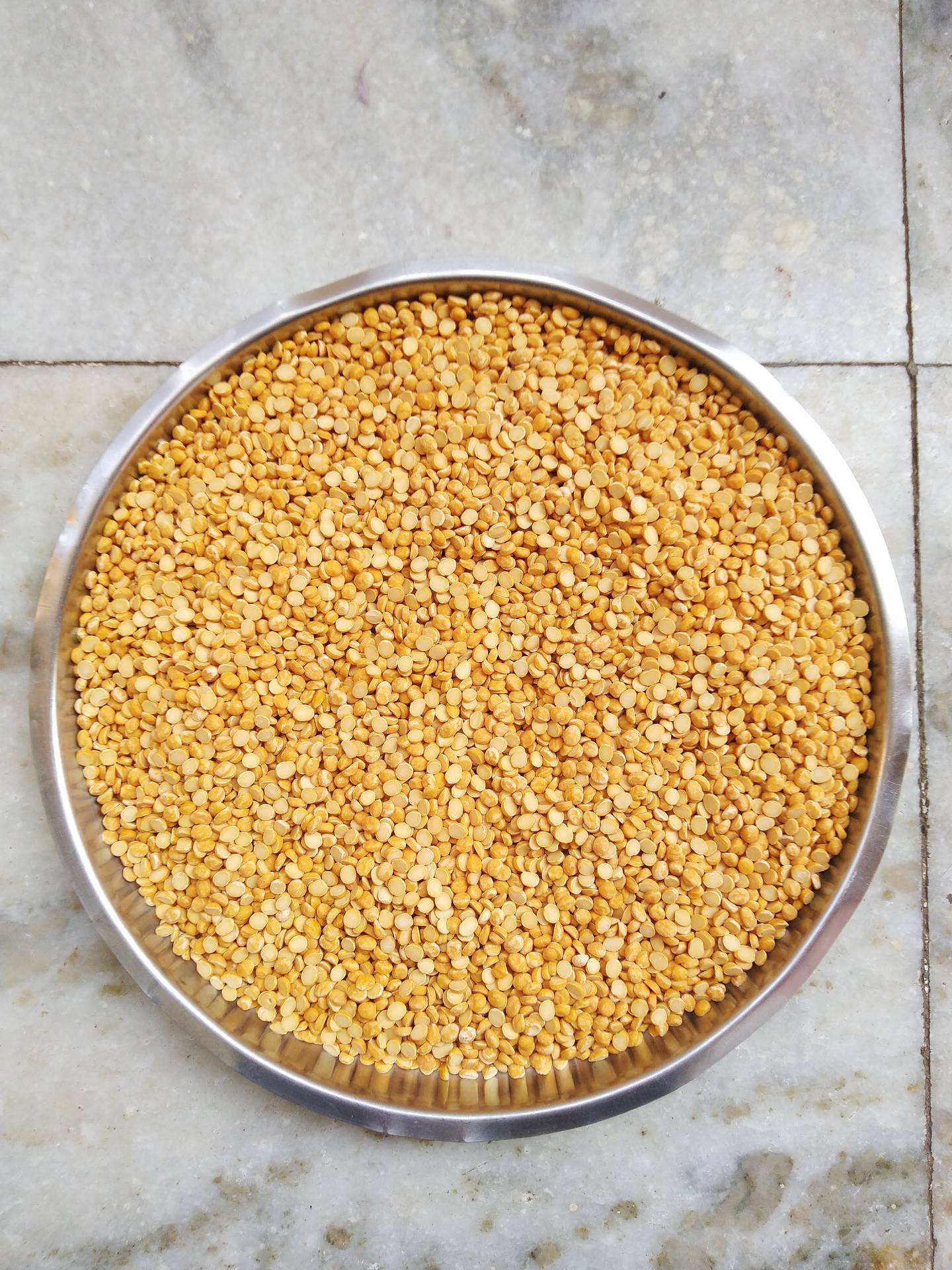
Chana dal and yellow split peas look enough alike to make a hurried grocery trip interesting. They are different pulses: chana dal comes from split, skinned desi chickpeas, while yellow split peas come from dried field peas. A yellow color alone is not a reliable label.
| Chana dal | Yellow split peas | |
|---|---|---|
| Made from | Desi chickpeas, also called Bengal gram | Mature dried peas |
| Common use | Dals, savory dishes and some sweets | Pea soup, dals and purées |
| Texture | Can stay distinct when cooked tender | Often cooked until soft or breaking down |
| Shopping clue | “Chana dal” or split Bengal gram | “Yellow split peas” or matar dal |
Texture varies with the particular batch and cooking method, so treat these as tendencies. If the packaging is ambiguous, ask the seller; trying to identify every yellow half-pea by sight is an ambitious hobby.
Can you substitute one for the other?
For a flexible soup or dal, often yes, with a change in flavor and texture. Cook the substitute according to its own package or a reliable recipe for that pulse. Don't assume the same soaking time, cooking time or water quantity will work.
For a dish where chana dal is meant to stay firm and separate, yellow split peas may soften differently. They are also not an automatic replacement in recipes that use dry chana dal as a seasoning or grind it for a specific batter.
Are either of them lentils?
Neither is a botanical lentil. In English, “dal” is often used for several split pulses and for dishes made from them, so names on recipes and shop shelves can overlap. Check the ingredient name rather than relying on “yellow dal” alone.