Calasparra Rice: An Origin Label, Not Another Name for Bomba
Calasparra is a protected Spanish rice designation.
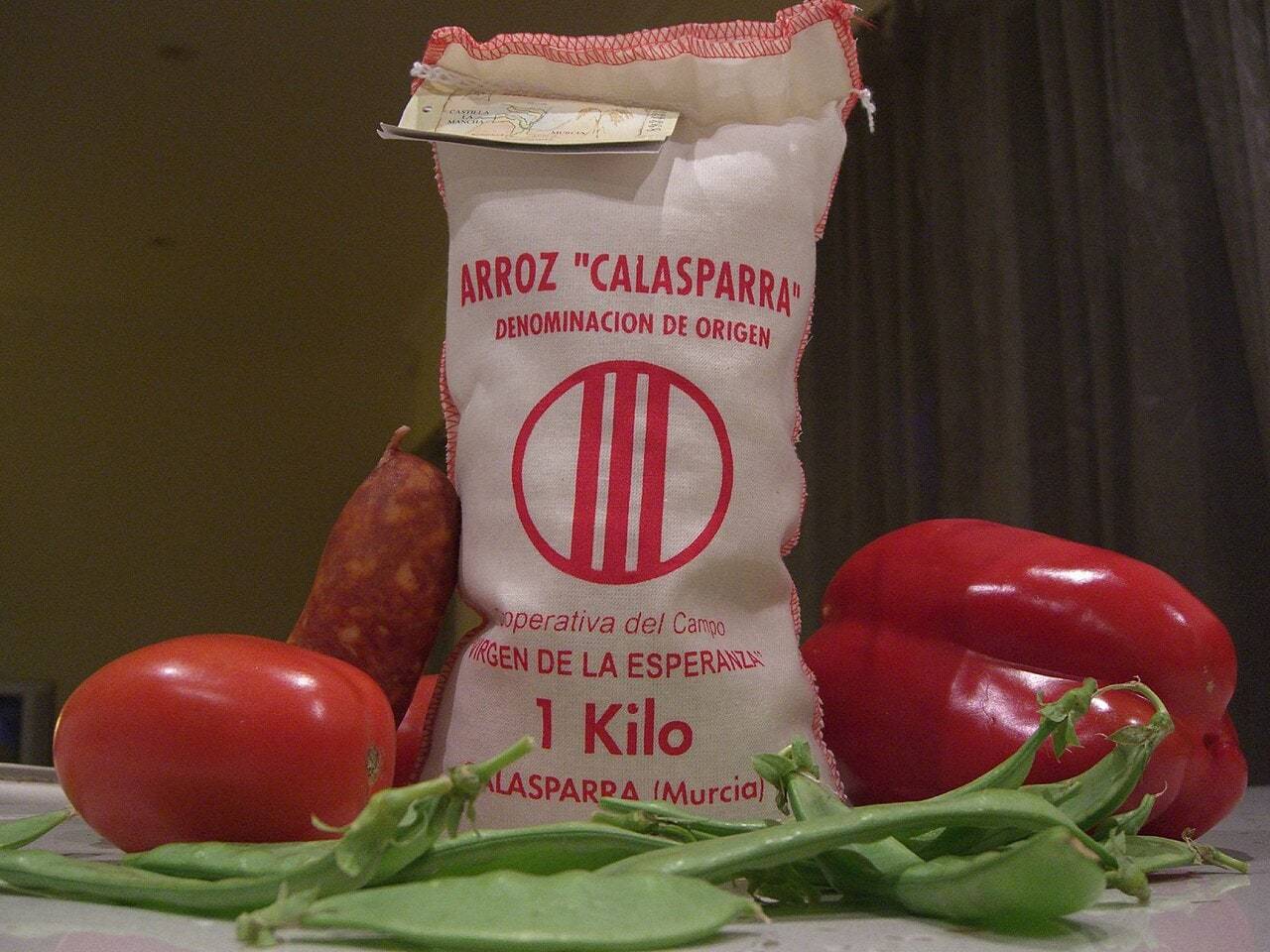
Calasparra is a protected Spanish rice designation. Its regulatory council lists two authorised varieties: Bomba and Balilla × Sollana. A packet can therefore be both Bomba and Calasparra, while another Calasparra packet contains a different variety.
This is the first thing to check when a recipe and a shop shelf seem to be using different names. One label can describe origin while another identifies the rice itself.
Choosing a bag for your recipe
Read both the variety and the packet's preparation guidance. If a recipe specifies Bomba, look for Bomba on the bag rather than assuming that the Calasparra name supplies that information.
The council describes different stock absorption in paella: up to 3½ parts stock for one part Balilla × Sollana, compared with 4½ parts for Bomba. These are descriptions of the varieties in that preparation, not a universal saucepan ratio. The packet and complete recipe still determine your starting liquid.
| What the label tells you | What to decide next |
|---|---|
| Calasparra Bomba | Use a recipe and liquid allowance intended for Bomba |
| Calasparra Balilla × Sollana | Follow guidance for that variety rather than importing Bomba instructions |
| Wholegrain or semi-wholegrain | Check a method for that milling; the name alone does not supply a white-rice cooking time |
The council lists Balilla × Sollana in several milled forms. Buying wholegrain because you prefer it can be a sound choice, but it is also a change that your cooking method needs to accommodate.
See our Bomba rice guide for the variety rather than the origin designation.
Why the pan still matters
A rice dish cooked in a broad, uncovered pan loses water differently from rice simmered in a covered saucepan. Follow a recipe that specifies the rice and equipment together. Changing the pan, rice and stock quantity at the same time makes a disappointing result difficult to diagnose.
Keep a photograph of the front and back of a new packet if you are experimenting. If the result works, you will know which variety and instructions to buy again. It is a small habit that is more useful than remembering only that the bag was blue.